What separates classical from quantum?
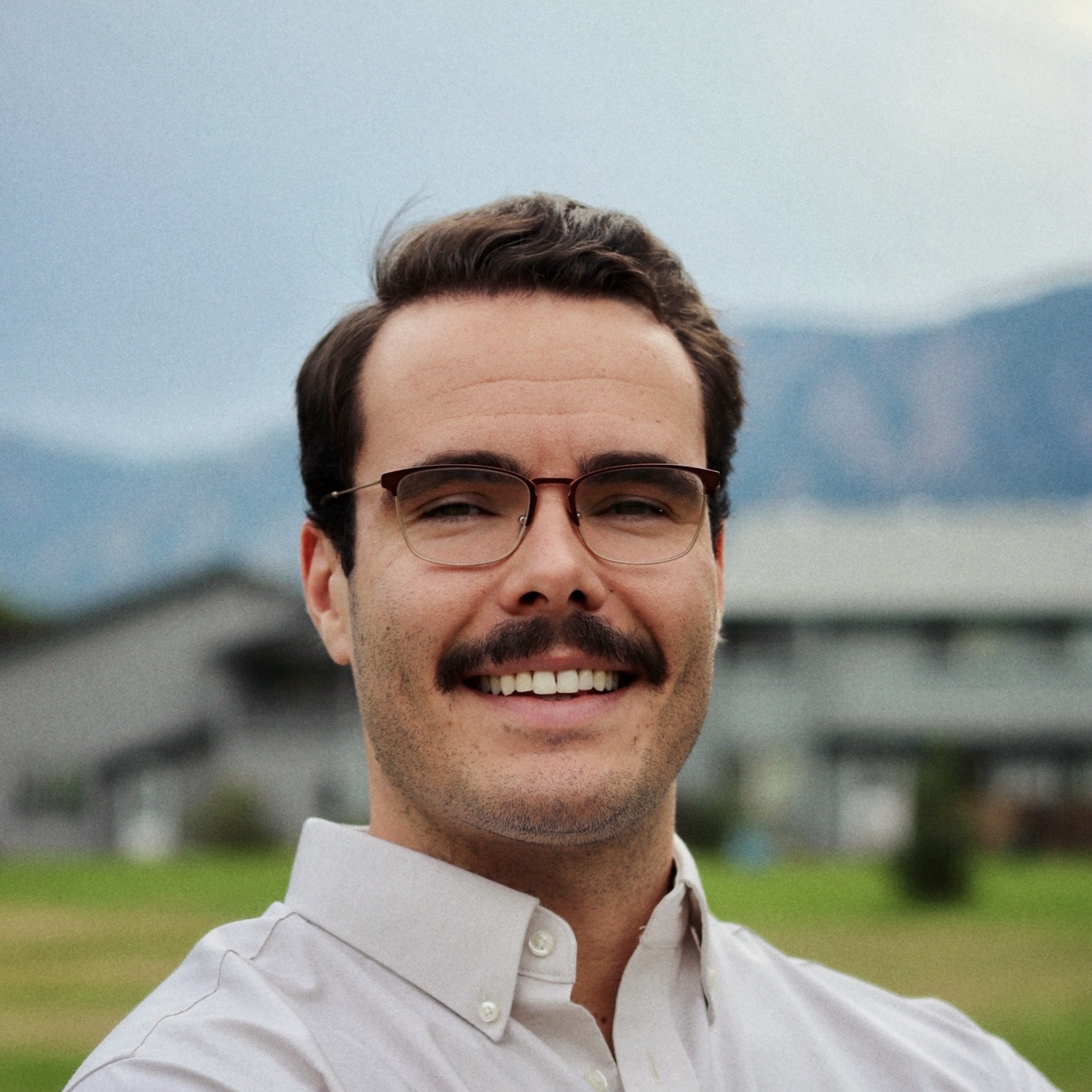
I am currently an NSF MSPRF and IQUIST postdoc in the math department at UIUC. In January 2027, I will join the physics department at the University of Rhode Island. My research uses tools from physics, mathematics, and computer science to solve problems in quantum learning theory, quantum sensing, and entanglement characterization.
Research themes
The unifying goal of my research is to understand the power and limitations of quantum technologies, both current and prospective. This practical motivation leads to many interesting theoretical questions whose solution often involves tools from linear algebra, representation theory, and quantum information theory.
Quantum learning theory
What resources are necessary and sufficient to learn/test properties of a quantum system? And how does the answer change when one's measurements are restricted by experimental capabilities?
Entanglement theory & characterization
How can we use various mathematical tools to understand multipartite entanglement? Practically, how do we efficiently quantify multipartite entanglement when restricted to realistic measurements?
Quantum sensing
Where are the fundamental limits on how precisely a quantum system can measure a signal? How do squeezing, entanglement, and non-demolition strategies actually perform in practice?
About me
In January 2027, I will join the Department of Physics at the University of Rhode Island as Assistant Professor. I am currently wrapping up a postdoctoral fellowship at the University of Illinois Urbana-Champaign, where I worked with Felix Leditzky as an NSF Mathematical Sciences Postdoctoral Research Fellow and an IQUIST Postdoctoral Fellow.
I completed my Ph.D. in physics at JILA / CU Boulder under Graeme Smith, and a research master's in quantum technology at the University of Birmingham as a Fulbright Postgraduate Scholar.
Alongside research, I am committed to teaching, mentorship, and outreach. Toward the end of my Ph.D., I co-founded the Idealized Science Institute — an educational non-profit that develops free, high-quality resources and professional development for STEM teachers. Many of my research projects involve undergraduate and master's students as co-authors.
Teaching & outreach
Teaching physics with care.
I believe students learn physics best by doing it. In my courses, students ask questions, make claims, and build knowledge together through discussion, encountering not just polished results but the messy, non-linear, deeply human process that produced them. Science literacy is not only for future scientists; it serves every student and the democracy we share.
View courses →The Idealized Science Institute.
I co-founded ISI to bring authentic science into K-12 classrooms — through teacher professional development, free curricular resources, and an annual regional science conference for high schoolers. The non-profit operates in-person throughout southwest Pennsylvania, but has an international presence online.
Visit ISI →Questions? Ask away!
I welcome inquiries from prospective undergraduate and graduate students. Students interested in joining my group at URI during the spring 2027 semester are especially encouraged to get in touch.
University of Illinois Urbana-Champaign